What to Expect from Veterinary Massage Therapy
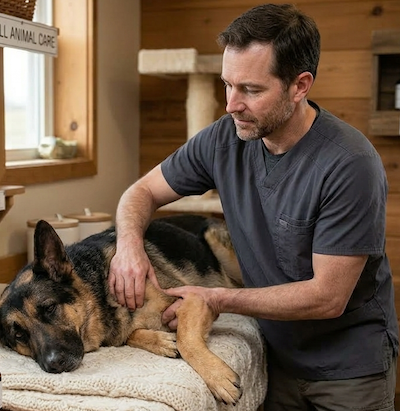
When most people think of massage, they think of a spa day — relaxation, ambient music, scented candles. Veterinary massage therapy is something quite different. It is a clinical treatment performed by trained professionals who understand animal anatomy, musculoskeletal function, and the physiological effects of soft tissue manipulation.
That said, most animals absolutely love it. Dogs lean into the practitioner's hands. Horses drop their heads and sigh. Even cats — not always the most cooperative patients — often settle into a deep calm. The therapeutic benefits are real, and the experience for the animal is almost universally positive.
If your veterinarian has recommended massage therapy for your pet, or if you are exploring it as part of an integrative care plan, here is what the process looks like from start to finish.
What Is Veterinary Massage Therapy?
Veterinary massage therapy is the systematic manipulation of soft tissues — muscles, tendons, ligaments, and fascia — to achieve therapeutic goals. These goals typically include:
- Pain relief through the release of muscle tension and trigger points
- Improved circulation bringing oxygen and nutrients to damaged tissue
- Reduced inflammation by promoting lymphatic drainage
- Increased range of motion in stiff or restricted joints
- Stress and anxiety reduction through activation of the parasympathetic nervous system
- Faster recovery from surgery, injury, or intense physical activity
Massage therapy is not the same as casually petting your dog or rubbing your horse's neck after a ride. Therapeutic massage uses specific techniques applied with precise pressure, direction, and duration to produce measurable physiological changes. The practitioner's hands are diagnostic tools as much as therapeutic ones — they can feel abnormalities in muscle tone, identify trigger points, and detect areas of inflammation that may not be visible on the surface.
Who Performs Veterinary Massage?
The credentialing landscape for animal massage varies by state, but generally:
- Licensed veterinarians can perform massage as part of their practice
- Certified veterinary technicians may perform massage under veterinary supervision
- Certified animal massage therapists have completed specialized training programs in animal massage. These programs typically require 200 to 600 hours of coursework in animal anatomy, physiology, pathology, and hands-on technique.
Respected certification programs include: - NBCAAM (National Board of Certification for Animal Acupressure and Massage) - LAMP (Large Animal Massage Practitioner) programs for equine specialists - Various state-approved animal massage certification programs
When choosing a practitioner, ask about their specific training in animal massage. Human massage therapy certification does not qualify someone to work on animals — the anatomy, muscle groups, and pathology are fundamentally different.
You can find massage therapy practitioners in our directory.
Which Animals Benefit from Massage?
Dogs are the most common small-animal massage patients. Working dogs, sport dogs, senior dogs, and dogs recovering from orthopedic surgery benefit significantly. Even healthy adult dogs benefit from periodic maintenance massage, especially active breeds.
Horses have the longest history with therapeutic massage. Equine massage is standard care in many performance barns and is widely used for competition horses, racehorses, and pleasure horses alike.
Cats respond well to gentle massage techniques, though sessions are typically shorter and the approach more delicate. Cats with arthritis, chronic pain, or anxiety are the most common feline candidates.
Other species — rabbits, goats, and some exotic animals — can also benefit from massage when performed by an experienced practitioner familiar with their anatomy.
What Conditions Does Massage Therapy Treat?
Muscle tension and spasm. The most immediate application. Chronic tension patterns develop from pain, compensatory movement, repetitive activity, or stress. Massage breaks these patterns and restores normal muscle function.
Post-surgical recovery. After orthopedic surgery (TPLO, fracture repair, spinal surgery), animals develop compensatory muscle patterns as they guard the surgical site. Massage helps normalize muscle function during rehabilitation.
Arthritis and chronic pain. Regular massage reduces pain perception, maintains joint mobility, and addresses the muscle tightness that accompanies chronic joint disease. It works particularly well alongside other modalities like acupuncture and laser therapy.
Soft tissue injuries. Strains, sprains, and overuse injuries respond well to targeted massage techniques that promote tissue healing and prevent adhesion formation.
Performance optimization. Sport and working dogs, competition horses, and other athletic animals benefit from pre-event preparation and post-event recovery massage.
Anxiety and stress. Massage activates the parasympathetic nervous system, lowering cortisol levels and promoting relaxation. Animals with separation anxiety, noise phobia, or general nervousness often show significant improvement with regular massage.
Age-related stiffness. Senior animals who are slowing down, reluctant to move, or showing decreased flexibility benefit from gentle massage that maintains circulation and comfort.
Lymphedema and swelling. Specialized lymphatic drainage massage techniques help reduce fluid accumulation after surgery, injury, or in conditions that impair lymphatic function.
Before the Appointment
Share medical records. The massage therapist needs to know about any diagnoses, surgeries, medications, and areas of concern. Some conditions require modified techniques or are contraindications for massage.
Note your pet's current issues. Where does your pet seem uncomfortable? When do they limp? Which leg do they favor? What activities have they stopped doing? These observations help the therapist focus the session.
Avoid heavy exercise beforehand. A calm, rested animal is easier to assess and responds better to treatment.
Plan for time. A first session typically takes 45 to 75 minutes (including assessment). Follow-up sessions run 30 to 60 minutes depending on the animal's size and condition.
For horses: Schedule in a clean, quiet area with good footing. The horse should not have just been worked. Have the horse available for the therapist to observe in motion before the hands-on work begins.
What Happens During a Massage Session
Step 1: Assessment (10-15 minutes, first visit)
The therapist begins by gathering information:
History. They review your pet's medical records, ask about the presenting concern, and discuss activity level, diet, and daily routine.
Visual assessment. They observe your pet standing, walking, and transitioning between positions. They look for: - Postural asymmetries - Weight shifting or favoring a limb - Muscle development imbalances - Areas of swelling or atrophy - Gait abnormalities
Palpation assessment. The therapist uses their hands to systematically evaluate muscle tone throughout the body, noting areas of tension, spasm, trigger points, heat, cold, swelling, or tenderness. This initial palpation serves as both diagnostic and baseline — something to compare against at the end of the session and at future visits.
Step 2: The Massage Treatment (20-45 minutes)
The therapist works systematically through the relevant muscle groups using a variety of techniques:
Effleurage. Long, flowing strokes that warm the tissue, increase circulation, and allow the therapist to assess the superficial muscle layers. This typically begins and ends each session.
Petrissage. Kneading, lifting, and squeezing of muscle tissue. This works deeper than effleurage and is effective for releasing tension in larger muscle groups.
Friction. Small, focused circular or cross-fiber movements applied to specific adhesions, scar tissue, or tight bands within muscle. Friction is used on targeted problem areas rather than broad regions.
Trigger point therapy. Sustained pressure on myofascial trigger points — hyperirritable spots within muscle that refer pain to other areas. When a trigger point is released, the relief can be dramatic and immediate.
Myofascial release. Gentle, sustained pressure applied to the fascial connective tissue to release restrictions. Fascia surrounds every muscle, organ, and nerve in the body, and fascial restrictions can cause pain and movement limitation far from their source.
Compression. Rhythmic pressing into muscle tissue, used particularly on large muscle groups. Common in equine massage.
Tapotement. Light, rhythmic tapping or percussion used to stimulate circulation and muscle responsiveness. Used selectively and not on all patients.
Passive range of motion. Gentle movement of joints through their natural range, often performed after the surrounding muscles have been relaxed. This is not the same as chiropractic adjustment — there is no thrust. The therapist gently moves the limb to assess and maintain joint mobility.
What Your Pet Experiences
Most animals go through a predictable progression during massage:
- Initial alertness. Especially on the first visit, the animal may be watchful and slightly tense as an unfamiliar person handles them.
- Relaxation onset. Within 5 to 10 minutes, most animals begin to relax. Dogs lower their heads, lean into the therapist, or lie down. Horses drop their heads, lick and chew, or cock a hind leg. Cats begin purring or kneading.
- Deep relaxation. As the session progresses, many animals enter a profoundly relaxed state. Some fall asleep. Muscle twitches, deep sighing, and yawning are common signs of tension release.
- Occasional sensitivity. When the therapist works on a particularly tight or sore area, the animal may flinch, look back, or tense briefly. A skilled therapist recognizes this and adjusts their pressure accordingly. Pain is never the goal.
Step 3: Post-Session Discussion
After the massage, the therapist discusses: - What they found — areas of significant tension, trigger points, muscle imbalances - How it relates to your pet's symptoms or performance issues - Recommendations — treatment frequency, home care techniques, stretches, or exercises - Referrals — if they identified issues that would benefit from chiropractic, acupuncture, or veterinary evaluation
Many therapists will teach owners basic massage techniques to use between professional sessions. Gentle effleurage along the spine, light compressions on major muscle groups, and ear massage for relaxation are all things owners can safely do at home.
What Happens After the Session
Increased relaxation. Most animals are noticeably calmer and sleepier after massage. This can last several hours to a full day.
Increased water intake. Massage releases metabolic waste products from muscle tissue. Encourage your pet to drink after the session.
Mild soreness. Some animals, particularly those with significant muscle tension, may be slightly sore for 24 hours after deep tissue work. This is normal and resolves quickly.
Improved mobility. Many owners notice their pet moves more freely within hours of the first session. Dogs that had been stiff getting up may rise more easily. Horses may move with greater fluidity.
Post-session care: - Provide fresh water and encourage drinking - Allow your pet to rest — avoid strenuous exercise for 24 hours - Note any changes in mobility, behavior, or comfort level
How Many Sessions Will My Pet Need?
- Acute issues (muscle strain, post-surgical): 3 to 6 sessions over 2 to 4 weeks
- Chronic conditions (arthritis, long-standing tension): 4 to 8 sessions initially, then transitioning to maintenance
- Maintenance (athletic animals, senior pets): Every 2 to 4 weeks
- Performance animals: Before and after competitions or intense training periods
Most practitioners recommend starting with weekly sessions and gradually spacing them out as the condition improves.
What Does It Cost?
- Initial assessment + first session (small animals): $75 to $150
- Follow-up sessions (small animals): $50 to $100
- Equine sessions: $75 to $175
- Package pricing: Many therapists offer packages of 4 to 6 sessions at a reduced per-session rate
Massage therapy is one of the most affordable holistic modalities, and some pet insurance plans cover it when prescribed by a veterinarian.
Contraindications
Massage is generally very safe, but it should be avoided or modified in certain situations:
- Fever or active infection — massage can spread infection through increased circulation
- Acute inflammation or injury (first 48 to 72 hours) — heat and increased blood flow can worsen acute inflammation
- Known or suspected fractures
- Skin conditions — open wounds, fungal infections, or contagious skin conditions in the treatment area
- Blood clotting disorders or animals on anticoagulant therapy
- Directly over tumors — increased circulation could theoretically promote spread
A qualified therapist screens for these conditions before every session.
Finding a Veterinary Massage Therapist
Our directory of holistic veterinarians lets you search for practices offering massage therapy by location. Many massage therapists also work alongside veterinary acupuncturists, chiropractors, and rehabilitation specialists, offering your pet access to a comprehensive care team.
Find a veterinary massage therapist near you →
The Bottom Line
Veterinary massage therapy is effective, safe, and enjoyable for the patient. It addresses a fundamental truth about animal health: muscles matter. Pain, stiffness, compensatory movement, and stress all manifest in the muscular system, and hands-on work is often the most direct way to resolve them.
Whether your pet is recovering from surgery, managing chronic pain, competing at a high level, or simply getting older and stiffer, massage therapy offers tangible benefits with virtually no risk. And the best part — your pet will almost certainly look forward to going back.
Join the Conversation
Have thoughts on this topic? Connect with other holistic pet parents in our community forum.
Join Holistic Pet Parents