What to Expect from Veterinary Homeopathy
Of all the holistic modalities available in veterinary medicine, homeopathy is perhaps the most misunderstood. It is not herbal medicine, it is not nutritional therapy, and it is not a general term for natural health care. Homeopathy is a distinct system of medicine with its own principles, its own diagnostic approach, and its own body of clinical literature stretching back over 200 years.
Whether you have been referred by your conventional vet, heard about it from another pet owner, or discovered it through your own research, you probably have questions about what homeopathic treatment actually involves. This guide walks you through the process from first consultation to follow-up care.
What Is Veterinary Homeopathy?
Homeopathy is based on the principle of "like cures like" — the idea that a substance that produces certain symptoms in a healthy individual can, in highly diluted form, stimulate the body to heal those same symptoms in a sick individual. This principle was first articulated by the German physician Samuel Hahnemann in the late 1700s and has been applied to animal medicine for nearly as long.
Homeopathic remedies are prepared through a process of serial dilution and succussion (vigorous shaking). The resulting preparations are highly diluted — far beyond what conventional pharmacology would consider an active dose. This is the aspect of homeopathy that generates the most debate. Proponents point to clinical outcomes and a growing body of research, while skeptics question the mechanism of action.
What is not debatable is that many veterinarians trained in homeopathy report significant clinical results, particularly for chronic conditions that have not responded well to conventional treatment. Pet owners who pursue homeopathic care are typically looking for a gentler approach with fewer side effects, especially for long-term health issues.
Who Practices Veterinary Homeopathy?
Veterinary homeopathy should only be practiced by a licensed veterinarian with additional training in homeopathic medicine. Key credentials include:
- AVH (Academy of Veterinary Homeopathy) — the primary professional organization for veterinary homeopaths in North America. AVH-certified veterinarians have completed extensive coursework and demonstrated clinical proficiency.
- IAVH (International Association for Veterinary Homeopathy) — the global organization for veterinary homeopaths.
- The Pitcairn Institute of Veterinary Homeopathy — founded by Dr. Richard Pitcairn, one of the pioneers of veterinary homeopathy in the United States. Graduates of this program receive rigorous training in classical homeopathic prescribing.
Classical homeopaths — those who follow Hahnemann's original methodology most closely — typically prescribe one remedy at a time and wait to observe the patient's full response before making changes. This is different from some practitioners who use multiple remedies simultaneously or use homeopathic remedies as part of a broader integrative protocol.
You can find homeopathic veterinarians near you in our directory.
Understanding Classical Homeopathy
To understand what happens during a homeopathic consultation, it helps to understand the basic principles:
The totality of symptoms. Homeopathy does not treat diseases — it treats patients. The homeopath considers every symptom the patient is experiencing, including physical symptoms, behavioral changes, emotional patterns, and environmental preferences. The goal is to find the single remedy that matches the total picture of the patient, not just the primary complaint.
Individualization. Ten dogs with the same Western diagnosis might each receive a different homeopathic remedy, because each dog presents the disease differently. One arthritic dog is worse in cold weather and better with gentle movement. Another is worse in the morning and better with warmth. These differences determine the remedy selection.
Minimum dose. Homeopaths use the smallest dose that will stimulate a healing response. This typically means highly diluted remedies given infrequently — sometimes a single dose with weeks or months of observation before repeating or changing the prescription.
The vital force. Homeopathy views the body as having an inherent self-healing capacity. The remedy does not treat the disease directly. Instead, it stimulates the body's own healing mechanisms to resolve the problem from within.
Before the Appointment: How to Prepare
Preparation for a homeopathic consultation is more involved than for most veterinary visits, because the homeopath needs an extraordinary amount of detail about your pet:
Observe your pet closely for several days beforehand. Note everything — when they sleep, where they sleep, how they respond to weather changes, what positions they prefer, how they interact with other animals and people, what makes their symptoms better or worse.
Write detailed notes. The homeopath will ask questions you have probably never been asked by a vet. Having notes prepared saves time and ensures you do not forget important details.
Bring complete medical records. All diagnoses, lab work, imaging, medications, and treatment history. The homeopath needs to understand what has already been tried and how the patient responded.
List all current medications, supplements, and treatments. Some substances can interfere with homeopathic remedies. The practitioner needs to know everything your pet is currently receiving.
Plan for a long appointment. A first homeopathic consultation typically takes 90 minutes to 2 hours. This is not a quick office visit — it is a deep investigation into your pet's complete health picture.
What Happens During the First Consultation
Step 1: The Homeopathic Interview (60-90 minutes)
This is the core of the consultation and it is unlike any veterinary appointment you have experienced. The homeopath will ask extensive questions covering:
The chief complaint in extreme detail. Not just "my dog has skin problems," but: - When exactly did it start? Was there a triggering event? - Where on the body did it begin? How has it spread? - What does it look like — dry, moist, crusty, red, hot, cold? - Is there itching? When is the itching worst — day or night? After eating? In certain weather? - What makes it better — cold applications, warm baths, scratching, leaving it alone? - What makes it worse — heat, cold, damp weather, certain foods, stress?
General symptoms and tendencies: - Temperature preferences — does your pet seek warmth or cool surfaces? - Thirst patterns — how much water, how often, cold or room temperature? - Appetite — voracious, picky, worse at certain times of day? - Sleep patterns — positions, location, restlessness, dreaming? - Energy levels — when are they highest and lowest? - Response to weather — worse in rain, wind, heat, cold, humidity?
Behavioral and emotional patterns: - Fears — thunderstorms, strangers, being alone, loud noises? - Social behavior — clingy, independent, aggressive, submissive? - Response to consolation — do they want comfort when sick or prefer to be alone? - Jealousy, possessiveness, territorial behavior? - How do they respond to being disciplined or scolded?
Past medical history: - Previous illnesses and how they resolved - Reactions to vaccines or medications - Family health history (if known) - Birth and early life circumstances (if known)
Every detail matters in homeopathy. A symptom that seems irrelevant to conventional medicine — like a dog that always sleeps with its head hanging off the bed — might be the key to selecting the correct remedy. The homeopath is building a complete portrait of the individual patient.
Step 2: Physical Examination
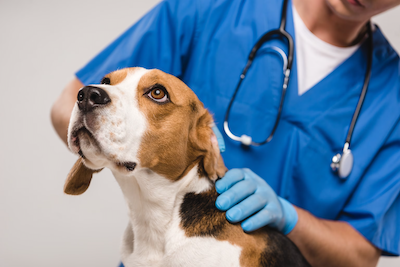
The homeopath performs a standard veterinary physical exam, enhanced by observations specific to homeopathic prescribing:
- Skin and coat quality — texture, temperature, moisture, odor
- Discharges — color, consistency, odor, irritation patterns
- Gland and lymph node assessment
- Pain patterns — location, quality, what aggravates and relieves
- Tongue and pulse (some homeopaths incorporate these, especially those with TCVM cross-training)
- General appearance — body condition, posture, energy, alertness
Step 3: Case Analysis and Remedy Selection
After the interview and exam, the homeopath analyzes the case. This process can take significant time — sometimes the remedy is selected during the appointment, and sometimes the homeopath needs hours or days to study the case before prescribing.
Repertorization. The homeopath translates the patient's symptoms into rubrics — standardized symptom descriptions used in homeopathic reference texts (called repertories). These rubrics are cross-referenced to identify which remedy covers the greatest number of the patient's characteristic symptoms.
Modern homeopaths often use software for this process, which can search thousands of remedies and symptoms simultaneously. However, software is a tool — the final remedy selection requires clinical judgment and experience.
Materia medica study. Once the repertorization narrows the field to a few candidate remedies, the homeopath reads the detailed descriptions of those remedies in the materia medica (the comprehensive reference text describing each remedy's known effects). The remedy that most closely matches the patient's total picture is selected.
Step 4: Prescription
The homeopath prescribes: - The remedy — identified by its Latin name (e.g., Arsenicum album, Pulsatilla, Sulphur) - The potency — the dilution strength (e.g., 30C, 200C, 1M). Higher potencies are generally reserved for more experienced prescribers and clearer symptom pictures. - The dosing schedule — how often to give the remedy. In classical homeopathy, this is often a single dose or a few doses, followed by a waiting period to observe the response. - What to watch for — expected signs of improvement, possible aggravation, and when to report back.
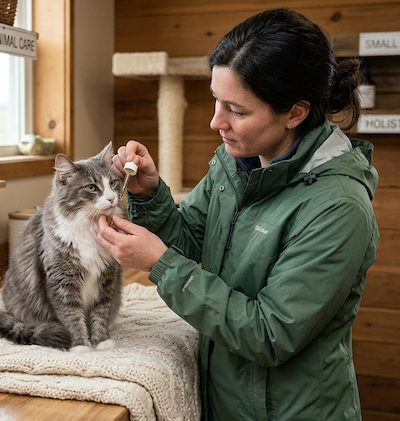
Remedies come as small pellets, liquid drops, or tablets. They are typically given directly into the mouth or dissolved in water. They are tasteless or slightly sweet, and most animals accept them easily.
What Happens After the Remedy Is Given
The observation period. After giving the remedy, the homeopath asks you to observe your pet carefully and report changes. This observation period is critical — it tells the homeopath whether the remedy is working and guides the next step.
Possible initial aggravation. Some patients experience a brief worsening of symptoms in the first 24 to 72 hours. In homeopathic theory, this is considered a positive sign — it indicates the remedy has engaged the vital force. The aggravation is typically mild and resolves on its own, followed by improvement.
Signs of a good response: - The pet seems brighter, more energetic, more engaged - Emotional or behavioral symptoms improve before physical symptoms - Symptoms begin resolving in a pattern — from more important organs to less important, from inside out, from top down, or in reverse chronological order - Appetite, sleep, and overall well-being improve
Timeline for improvement. Acute conditions may respond within hours. Chronic conditions typically show initial signs of improvement within 1 to 4 weeks, with continued progress over months. Deep, long-standing conditions may require several remedy changes over many months.
Follow-Up Appointments
Follow-up visits are shorter (30 to 45 minutes) and focus on: - What has changed since the remedy was given - New symptoms that have appeared - Symptoms that have improved or worsened - Overall energy, mood, and well-being
Based on this assessment, the homeopath may: - Wait and watch — if the remedy is working, no change is made - Repeat the same remedy — if improvement has plateaued - Change the potency — if the remedy is correct but needs a different strength - Prescribe a new remedy — if the symptom picture has shifted or the first remedy was not the best match
What Conditions Does Veterinary Homeopathy Treat?
Homeopathy is used for a wide range of conditions, with particular strength in:
Chronic skin conditions — allergies, recurring hot spots, eczema, autoimmune skin disease. Skin conditions are among the most common reasons pet owners seek homeopathic care.
Behavioral issues — anxiety, fear, aggression, compulsive behaviors, grief. Homeopathy's individualized approach is well suited to behavioral conditions where the emotional picture is central.
Digestive disorders — inflammatory bowel disease, chronic vomiting, diarrhea, food sensitivities.
Respiratory conditions — chronic cough, asthma, recurring upper respiratory infections.
Musculoskeletal pain — arthritis, injuries, post-surgical recovery.
Autoimmune conditions — where conventional immunosuppressive therapy carries significant side effects.
Acute conditions — injuries, bites, stings, acute infections. Many homeopaths also use remedies for first aid and acute situations.
Senior pet support — cognitive decline, incontinence, general debility.
How Many Visits Will My Pet Need?
- Acute conditions: 1 to 3 visits over days to weeks
- Chronic conditions: 4 to 8 visits over months, with visits spaced further apart as improvement progresses
- Long-standing complex cases: Ongoing care over 6 to 12+ months
The timeline depends on the depth and duration of the condition, the patient's overall vitality, and the accuracy of the remedy selection. Homeopathic treatment is often slower than conventional medicine but aims for deeper, more lasting resolution.
What Does It Cost?
- Initial consultation (90-120 minutes): $200 to $400
- Follow-up visits (30-45 minutes): $75 to $175
- Remedies: $10 to $25 per remedy (homeopathic remedies are very inexpensive)
- Phone or email follow-ups: Many homeopaths include brief check-ins between visits at no additional charge
The remedies themselves are among the least expensive treatments in veterinary medicine. The primary cost is the practitioner's time and expertise in case analysis.
Finding a Veterinary Homeopath
Veterinary homeopathy requires significant training beyond veterinary school, and the number of qualified practitioners is smaller than for modalities like acupuncture or chiropractic. If there is no certified veterinary homeopath in your area, many practitioners offer consultations by phone or video, working in coordination with your local veterinarian for physical exams and diagnostics.
Our directory of holistic veterinarians lets you search for homeopathy practitioners by location.
Find a veterinary homeopath near you →
The Bottom Line
Veterinary homeopathy is not a quick fix. It requires patience, detailed observation, and trust in a process that works differently from anything in conventional medicine. The first appointment is long. The questions are unusual. The remedy may be a single dose of something you have never heard of, followed by weeks of watching and waiting.
But for pet owners whose animals have chronic conditions that conventional medicine has not fully resolved — or for those who want an approach that works with the body rather than against the disease — homeopathy offers a genuinely different path. The investment of time and attention often pays off in ways that surprise even skeptical owners.
Join the Conversation
Have thoughts on this topic? Connect with other holistic pet parents in our community forum.
Join Holistic Pet Parents