Understanding TCVM: Traditional Chinese Veterinary Medicine Explained
Traditional Chinese Veterinary Medicine, commonly known as TCVM, is one of the oldest and most comprehensive systems of animal health care in the world. With roots stretching back over 3,000 years, TCVM offers a complete framework for understanding, diagnosing, and treating animal health conditions that is fundamentally different from Western veterinary medicine—yet remarkably complementary to it.
If you have seen TCVM listed as a specialty for veterinarians in our directory, you may be wondering what it involves and how it might help your pet. This guide provides a thorough introduction.
What Is TCVM?
TCVM is the application of Traditional Chinese Medicine principles to veterinary practice. It views the body as an interconnected system where health depends on the balanced flow of vital energy, known as Qi (pronounced "chee"), through the body.
When Qi flows freely and is in balance, the animal is healthy. When the flow of Qi is disrupted or imbalanced, disease results. The goal of TCVM treatment is to restore balance and proper Qi flow, thereby allowing the body to heal itself.
This may sound abstract, but in practice, TCVM provides a highly systematic and detailed framework for diagnosing and treating disease. TCVM practitioners undergo extensive training to learn pattern recognition, diagnostic techniques, and treatment protocols that have been refined over millennia.
The Five Branches of TCVM
TCVM encompasses five distinct but interrelated treatment modalities:
1. Acupuncture
Acupuncture is the most widely known branch of TCVM. It involves inserting thin, sterile needles into specific points on the body to stimulate healing, relieve pain, and restore the flow of Qi. Veterinary acupuncture has been extensively studied and is one of the most evidence-supported holistic modalities available.
In animals, acupuncture points are located along meridians—channels through which Qi flows. There are over 170 recognized acupuncture points in dogs and cats. The specific points selected for treatment depend on the animal's diagnosis and the condition being treated.
Modern research has shown that acupuncture stimulates nerve endings, releases endorphins and other natural pain-relieving chemicals, improves blood circulation, and modulates the immune system.
2. Chinese Herbal Medicine
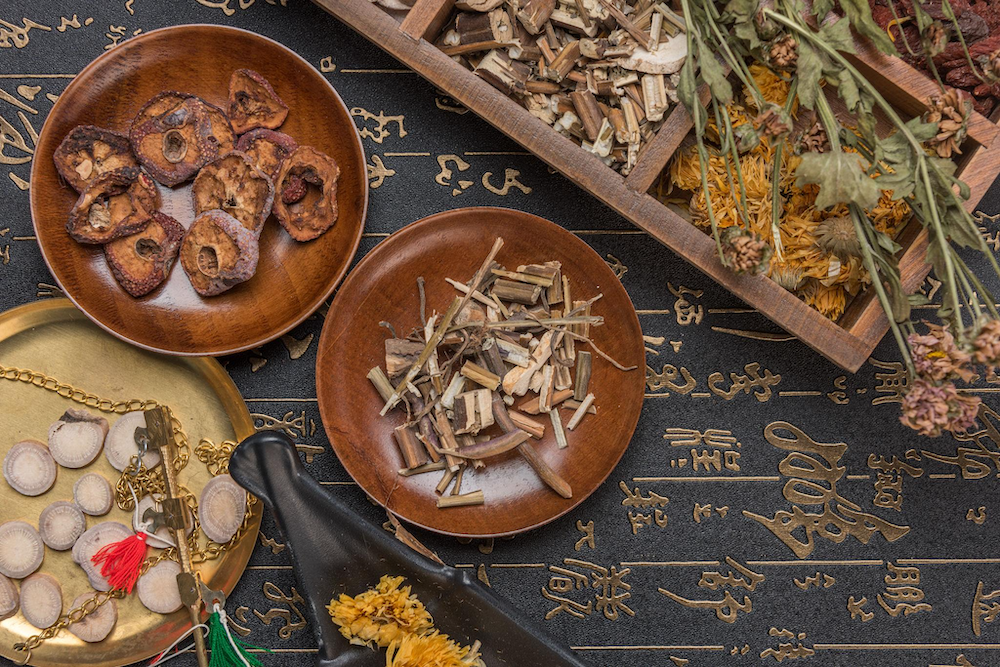
Chinese herbal medicine uses carefully formulated combinations of plant, mineral, and sometimes animal-derived ingredients to treat disease. Unlike Western herbalism, which often uses single herbs, Chinese herbal medicine relies on complex formulas where multiple ingredients work together synergistically.
These formulas are prescribed based on the individual animal's TCVM diagnosis. Two dogs with the same Western diagnosis (such as arthritis) might receive completely different herbal formulas based on their TCVM pattern of disharmony.
3. Food Therapy
Food therapy is a unique and fascinating branch of TCVM that uses the energetic properties of foods to prevent and treat disease. In TCVM, every food has specific thermal properties (warming, cooling, or neutral) and affects specific organ systems.
A TCVM food therapy plan might recommend warming foods for a pet who tends to seek heat, or cooling foods for a pet with inflammatory conditions. This approach goes far beyond standard nutritional advice and can be a powerful complement to other treatments.
4. Tui-Na Massage
Tui-Na is a therapeutic massage technique that uses specific hand movements and pressure on acupuncture points and meridians to promote Qi flow, relieve muscle tension, and support healing. It is often used alongside acupuncture and can be taught to pet owners for at-home maintenance between veterinary visits.
5. Qi Gong
Qi Gong involves gentle exercises and breathing techniques designed to cultivate and balance Qi. While it is practiced less commonly in veterinary medicine than the other four branches, some TCVM practitioners incorporate Qi Gong principles into their treatment approach and may teach exercises that owners can do with their pets.
How TCVM Diagnosis Works
One of the most distinctive aspects of TCVM is its diagnostic approach. Rather than relying solely on lab tests and imaging, TCVM practitioners use observational and palpation techniques that have been refined over centuries:
Tongue diagnosis: The color, shape, moisture, and coating of your pet's tongue provide important diagnostic information. A pale tongue might indicate a deficiency, while a red tongue could suggest excess heat.
Pulse diagnosis: TCVM practitioners feel the pulse at specific points to assess the quality of Qi flow and the condition of internal organs. The pulse is evaluated for rate, strength, quality, and other subtle characteristics.
Constitutional assessment: Your pet's overall constitution—their personality, preferences, physical build, and tendencies—provides essential diagnostic information in TCVM.
Pattern recognition: Based on all gathered information, the TCVM practitioner identifies a "pattern of disharmony" that guides treatment. This pattern describes the nature and location of the imbalance in the animal's body.
Common Conditions Treated with TCVM
TCVM is used to treat a remarkably wide range of conditions, including:
- Musculoskeletal pain and arthritis
- Gastrointestinal disorders
- Skin conditions and allergies
- Respiratory problems
- Neurological conditions including paralysis and seizures
- Endocrine disorders
- Behavioral and emotional problems
- Cancer support and palliative care
- Reproductive issues
- Immune system dysfunction
- Kidney and liver disease
- Geriatric wellness and quality of life
TCVM is particularly valued for its effectiveness with chronic conditions that may not respond fully to conventional Western treatment.
TCVM and Western Medicine: Better Together
The most effective modern TCVM practitioners are integrative veterinarians who use both TCVM and Western medicine. This combination allows them to use Western diagnostic tools like blood work and imaging for precise diagnosis while applying TCVM treatment principles for conditions where they offer advantages.
For example, a dog with intervertebral disc disease might receive an MRI for diagnosis (Western medicine), anti-inflammatory medication for acute pain management (Western medicine), acupuncture for pain relief and nerve function recovery (TCVM), Chinese herbal medicine for inflammation and healing (TCVM), and food therapy to support overall recovery (TCVM).
Finding a Qualified TCVM Practitioner
The Chi Institute, founded by Dr. Huisheng Xie, is the leading training institution for TCVM in the Western world. Veterinarians who have completed Chi Institute certification programs have undergone extensive training in TCVM theory, diagnosis, and treatment.
Other qualifications to look for include IVAS certification for acupuncture and membership in the AHVMA.
Our directory includes veterinarians across the country who practice TCVM. Search by your location and look for practitioners with TCVM, acupuncture, or Chinese herbal medicine listed among their specialties. Many TCVM practitioners also offer telehealth consultations for herbal medicine and food therapy.
TCVM offers a rich, time-tested approach to animal health care that can complement modern veterinary medicine beautifully. If you are looking for a deeper understanding of your pet's health and more treatment options, TCVM may be exactly what you are searching for.
Join the Conversation
Have thoughts on this topic? Connect with other holistic pet parents in our community forum.
Join Holistic Pet Parents