Laser Therapy for Pets: How It Works and What It Treats
Laser therapy—also known as cold laser therapy, low-level laser therapy, or photobiomodulation—has become one of the most popular and rapidly growing holistic treatment modalities in veterinary medicine. It is non-invasive, painless, drug-free, and effective for a wide range of conditions. If you have noticed laser therapy listed among a holistic vet's services and wondered what it is all about, this guide covers everything you need to know.
What Is Veterinary Laser Therapy?
Veterinary laser therapy uses focused light energy at specific wavelengths to stimulate healing at the cellular level. Unlike surgical lasers that cut tissue, therapeutic lasers deliver light energy that penetrates into tissues without causing damage. This light energy triggers biological processes that reduce inflammation, relieve pain, and accelerate tissue repair.
The scientific term for this process is photobiomodulation, which literally means "modulating biological processes with light." When laser light is absorbed by cells, it stimulates the mitochondria—the energy-producing structures within cells—to produce more ATP (adenosine triphosphate), the fuel that cells need to function and repair themselves.
How Laser Therapy Works at the Cellular Level
Understanding the science behind laser therapy helps explain why it is so versatile:
Increased cellular energy: Laser light stimulates mitochondria to produce more ATP, giving cells the energy they need to repair damaged tissue, reduce inflammation, and function optimally.
Improved blood circulation: Laser therapy promotes vasodilation (widening of blood vessels), which increases blood flow to the treated area. Better blood flow means more oxygen and nutrients reach damaged tissues, and waste products are removed more efficiently.
Reduced inflammation: Laser light reduces the production of pro-inflammatory chemicals while promoting the release of anti-inflammatory substances. This helps break the cycle of chronic inflammation that drives many painful conditions.
Pain relief: Laser therapy reduces pain through multiple mechanisms, including decreasing nerve sensitivity, reducing inflammation, and stimulating the release of endorphins—the body's natural pain-relieving chemicals.
Accelerated tissue repair: By providing cells with extra energy and improving blood flow, laser therapy speeds up the body's natural healing processes. This is why it is so effective for wound healing and post-surgical recovery.
Conditions Laser Therapy Treats
Laser therapy is used for an impressively wide range of conditions in veterinary medicine:
Arthritis and joint pain: This is one of the most common applications. Laser therapy can significantly reduce pain and inflammation in arthritic joints, improving mobility and quality of life for aging pets.
Post-surgical healing: Many veterinary surgeons now use laser therapy after surgical procedures to reduce pain, minimize swelling, and speed recovery. It is commonly used after orthopedic surgeries, soft tissue surgeries, and dental procedures.
Wound healing: Laser therapy accelerates the healing of wounds, surgical incisions, hot spots, and skin infections. It is particularly useful for wounds that are slow to heal.
Back pain and disc disease: Dogs with intervertebral disc disease (IVDD) or other spinal conditions often benefit significantly from laser therapy, which can reduce inflammation around the spinal cord and relieve associated pain.
Ear infections: Laser therapy can reduce inflammation and pain associated with ear infections while also helping the tissue heal more quickly.
Muscle, tendon, and ligament injuries: Strains, sprains, and other soft tissue injuries respond well to laser therapy, which can accelerate healing and reduce the risk of chronic problems.
Lick granulomas: These stubborn, self-traumatizing lesions often respond to laser therapy when other treatments have failed.
Nerve injuries and neuropathies: Laser therapy may help support nerve regeneration and reduce pain associated with nerve damage.
What a Laser Therapy Session Looks Like
Laser therapy sessions are straightforward and generally very well tolerated by pets:
Preparation: Your pet does not need any special preparation. The treatment area may be clipped if hair is thick, and everyone in the treatment room (including your pet) will wear protective eyewear appropriate for the laser wavelength being used.
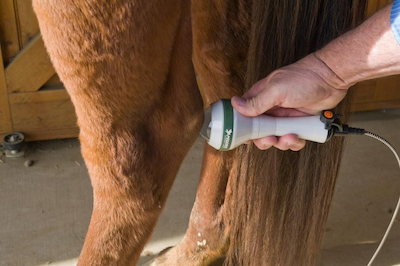
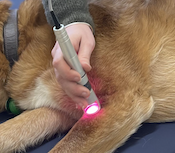
During treatment: The practitioner holds the laser handpiece over the treatment area, moving it slowly across the skin. Most sessions last between 5 and 20 minutes, depending on the condition being treated, the area covered, and the type of laser used. Many pets relax during treatment, and some even fall asleep.
After treatment: There is no downtime after laser therapy. Your pet can resume normal activities immediately. Some pets show noticeable improvement after a single session, while others may need several treatments before results become apparent.
How Many Sessions Are Needed?
The number of sessions depends on the condition being treated:
- Acute conditions (fresh wounds, recent injuries): 3 to 6 sessions, often performed daily or every other day
- Chronic conditions (arthritis, disc disease): 6 to 10 initial sessions, typically twice weekly, followed by maintenance sessions every 2 to 4 weeks
- Post-surgical recovery: 3 to 6 sessions, starting immediately after surgery
Your veterinarian will recommend a treatment protocol specific to your pet's needs and adjust it based on their response.
Cost of Laser Therapy
Laser therapy is generally affordable compared to many other veterinary treatments:
- Individual sessions typically range from $30 to $80, depending on the treatment area and duration
- Many practices offer package pricing for a series of treatments, which can reduce the per-session cost
- Initial treatment courses of 6 sessions might cost $200 to $400 total
- Maintenance sessions are typically needed once or twice monthly for chronic conditions
The cost-effectiveness is enhanced by the fact that laser therapy may allow for reduced use of pain medications, which have their own costs and potential side effects.
Class III vs. Class IV Lasers
You may hear practitioners mention different "classes" of therapeutic lasers:
Class III (cold lasers): These lower-powered lasers have been used in veterinary medicine for decades. They are effective but may require longer treatment times to deliver adequate energy to deeper tissues.
Class IV (hot lasers): These higher-powered lasers can deliver more energy in less time and penetrate deeper into tissues. They have become the standard in many veterinary practices due to their efficiency and effectiveness. Despite being called "hot" lasers, they do not burn tissue when used properly.
Both types are effective; the main differences are treatment speed and depth of penetration.
Safety Considerations
Laser therapy is extremely safe when performed by a trained practitioner:
- The most important safety precaution is proper eye protection. Direct laser light can damage the retina, so protective goggles must be worn by all people and the patient during treatment.
- Laser therapy should not be applied directly over cancerous tumors, as the growth-stimulating effects could potentially promote tumor growth. However, it can be safely used on other areas of a patient with cancer.
- It should be used cautiously over growth plates in young, growing animals.
- Pregnant animals should not receive laser therapy over the abdomen.
Side effects are extremely rare. Occasionally, a pet may experience a temporary increase in discomfort as part of the healing response, but this typically resolves within 24 hours.
Finding a Vet Who Offers Laser Therapy
Laser therapy is widely available at both conventional and holistic veterinary practices. Use our directory to find holistic vets in your area who include laser therapy among their services. When contacting a practice, ask about the type of laser they use, their experience with your pet's specific condition, and their recommended treatment protocol.
Laser therapy represents one of the most accessible entry points into holistic veterinary care—it is evidence-based, non-invasive, and well-accepted by both conventional and holistic practitioners. If your pet is dealing with pain, inflammation, or slow healing, laser therapy may be an excellent treatment option to explore.
Join the Conversation
Have thoughts on this topic? Connect with other holistic pet parents in our community forum.
Join Holistic Pet Parents