How a Holistic Vet Can Help Your Allergic Dog — and How to Find One
How a Holistic Vet Can Help Your Allergic Dog — and How to Find One
For many dog owners, the allergy management cycle becomes frustratingly familiar: a steroid shot or Apoquel prescription provides relief, symptoms return in a few weeks, another round of medication is needed. Over time, the doses increase, the relief periods shorten, and the dog never quite returns to normal between flares.
If this describes your experience, you're not alone — and you're not out of options. Holistic and integrative veterinarians approach dog allergies differently, asking not just "how do we stop the itch" but "why is this dog's immune system responding this way, and what can we do to change that?" For a significant number of dogs, this approach leads to better long-term outcomes than symptom management alone.
What Makes a Holistic Vet's Approach to Allergies Different
Root Cause Focus
The defining difference is orientation. Where conventional allergy management focuses primarily on controlling the immune response — using antihistamines, corticosteroids, or targeted biologics like Cytopoint — holistic veterinarians focus on understanding and addressing why the immune response is overactive.
This leads to a different set of questions and a broader treatment strategy:
- Is the gut microbiome disrupted, driving immune dysregulation from within?
- Is the diet contributing to systemic inflammation or triggering an immune response?
- Is the skin barrier compromised, allowing allergens to penetrate more easily?
- Are there multiple overlapping triggers whose combined burden keeps the immune system in a reactive state?
Addressing these underlying factors doesn't make allergies disappear overnight, but over weeks and months of consistent work, many dogs achieve meaningful reduction in symptoms and reduced dependence on pharmaceutical support.
The Whole Dog
Holistic veterinarians spend more time on the initial consultation than a typical conventional appointment allows. They want to understand the dog's full history: when symptoms first appeared, how they've progressed, every diet the dog has been on, medication history, vaccination history, and how the dog is doing overall — energy, digestion, behavior, sleep.
This comprehensive picture regularly reveals connections that focused appointments miss. The dog whose skin problems intensified after a particular food transition. The dog whose allergies worsened following multiple antibiotic courses. The dog whose symptoms track precisely with grass pollen season but whose previous vet only ran the same blood panel each year.
Integration, Not Rejection
A common misconception is that holistic veterinarians reject conventional medicine. Most integrative practitioners don't — they use conventional diagnostics (allergy testing, skin cytology, bloodwork, dermatology referrals) and pharmaceutical interventions when needed. The philosophy is complementary: use what works from both approaches, guided by what each individual dog needs.
Which Specialist Is Right for Your Dog?
Several holistic specialties are particularly relevant for allergic dogs:
Integrative Veterinarians
Integrative vets hold a conventional veterinary degree and have pursued additional training in one or more holistic modalities — acupuncture, herbal medicine, nutritional therapy, or others. They can coordinate the full spectrum of care: conventional diagnostics and pharmaceutical management alongside holistic interventions.
Best for: Dogs with moderate to severe allergies who need both conventional diagnostics and holistic treatment support; dogs currently on medication who need help reducing dependence over time.
Veterinary Nutritional Therapists
Vets with specialized training in clinical nutrition who can design and supervise therapeutic diet protocols, including elimination trials for suspected food allergies. Diet is foundational to allergy management, and getting it right — particularly a properly conducted elimination trial — benefits from expert guidance.
Best for: Any allergic dog where food is suspected as a contributing factor; dogs whose symptoms involve both skin and digestive issues; dogs who haven't improved despite dietary changes attempted without guidance.
Traditional Chinese Veterinary Medicine (TCVM) Practitioners
Vets trained in Traditional Chinese Veterinary Medicine use acupuncture, Chinese herbal medicine, and food therapy guided by a constitutional assessment of the individual dog. TCVM offers a framework for understanding allergic dogs that complements Western diagnostics — classifying patients not by allergen type but by the underlying pattern of immune imbalance.
For allergic dogs, TCVM is particularly valuable for chronic or complex cases that haven't fit neatly into conventional categories, or that have plateaued with conventional management.
Best for: Chronic or complex allergies; dogs with constitutional patterns that a TCVM practitioner can assess and address; owners who prefer a traditional medicine framework.
Veterinary Herbalists
Vets with specialized training in botanical medicine can provide prescription-quality herbal formulas tailored to the individual dog — immune modulators, anti-inflammatories, skin and liver supportives, gut restorative formulas. These are different from over-the-counter supplements and are prescribed based on a full clinical assessment.
Best for: Owners who want to minimize pharmaceutical exposure; dogs with chronic inflammation and secondary organ involvement; as a complement to dietary and environmental management.
Questions to Ask a Prospective Holistic Vet
Before or at your first appointment, these questions help gauge whether the approach is a good fit:
-
What is your experience treating dogs with chronic allergies? — Look for a practitioner who has managed many cases and can speak to realistic outcomes.
-
How do you approach the relationship between gut health and allergy? — A holistic vet should be able to speak fluently about this connection.
-
Do you work alongside conventional vets, or do you expect me to use you exclusively? — Integrative practitioners should welcome collaboration. Be cautious of anyone who discourages conventional veterinary care.
-
How long before I should expect to see improvement? — Honest answer: most dogs take 2–3 months of consistent work before meaningful improvement is visible. Anyone promising rapid dramatic results is overstating expectations.
-
What does a typical treatment protocol look like for an allergic dog? — There should be a thoughtful answer covering dietary assessment, gut support, environmental modifications, and appropriate follow-up.
What to Expect at Your First Holistic Vet Appointment
A first holistic consultation for an allergic dog typically lasts 60–90 minutes — significantly longer than a standard veterinary appointment. Come prepared with:
- A complete diet history — every food, treat, and supplement your dog has received, ideally going back a year or more
- A symptom timeline — when symptoms first appeared, how they've progressed, whether they're seasonal or year-round, and any correlations you've noticed
- Medication and vaccination records
- Any previous allergy testing results
- Questions — write them down ahead of time so you don't forget
The appointment will cover the dog's history, a physical examination, and potentially a TCVM assessment if the vet is trained in it (pulse diagnosis, tongue examination). At the end, you should leave with a clear initial plan and realistic expectations for the road ahead.
Holistic Allergy Management Takes Time — and Is Worth It
Holistic allergy treatment is not a quick fix. Most dogs take weeks to months of consistent dietary, supplement, and environmental work before the immune system begins to genuinely rebalance. This is not a sign that the approach isn't working — it reflects the time required for the gut microbiome to restore, the skin barrier to repair, and the immune system to down-regulate its overactivation.
The reward for that patience is often substantial. Many dogs who have been on lifelong allergy medication achieve significant symptom reduction through a committed holistic approach — and some achieve complete remission. Even dogs who continue to need some pharmaceutical support frequently need less of it, with fewer side effects and better overall quality of life.
For a complete overview of the holistic approach to dog allergies, see our Holistic Approaches to Dog Allergies: A Complete Guide.
Find a Holistic Vet for Your Allergic Dog
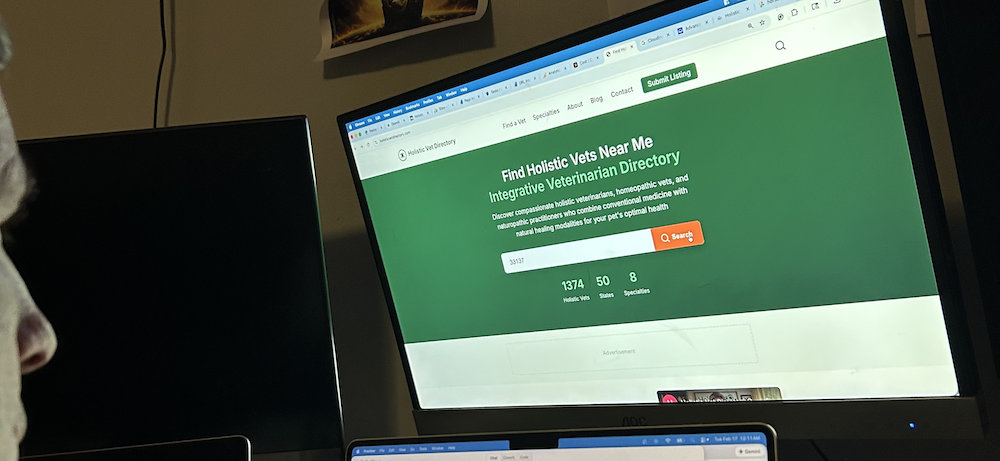
Our directory lists holistic and integrative veterinarians across the United States. You can search by location and filter by specialty to find practitioners trained in nutritional therapy, TCVM, herbal medicine, and integrative medicine near you.
Frequently Asked Questions
What kind of vet should I see for dog allergies? An integrative veterinarian is the best starting point for moderate to severe allergies — they coordinate conventional diagnostics with holistic treatment. A veterinary nutritional therapist is essential if food is suspected as a driver. A TCVM-trained vet is valuable for chronic or complex cases. Many holistic vets have training in multiple modalities and can address several dimensions of allergy management in a single practice.
What does a holistic vet do for dog allergies that a regular vet doesn't? Holistic vets spend significantly more time on root-cause investigation — gut health, diet history, immune function patterns, skin barrier status — and bring a wider treatment toolkit including nutritional protocols, probiotics, omega-3 supplementation, herbal medicine, and acupuncture. Initial consultations typically run 60–90 minutes compared to 15–20 minutes for a standard appointment, allowing a more thorough picture to emerge.
How much does a holistic vet appointment cost? Initial holistic vet consultations typically range from $100 to $300 or more depending on location, specialty, and appointment length. Follow-up visits are usually shorter and less expensive. Some practitioners offer telehealth consultations at a lower cost. While the upfront investment may be higher than a standard appointment, many owners find it cost-effective over time as the need for repeated treatments decreases.
How do I find a holistic vet for dog allergies near me? You can search the Holistic Vet Directory by city, state, or ZIP code and filter by specialty — Integrative Medicine, Nutritional Therapy, Traditional Chinese Veterinary Medicine, or Herbal Medicine — to find practitioners experienced with allergic dogs in your area.
Join the Conversation
Have thoughts on this topic? Connect with other holistic pet parents in our community forum.
Join Holistic Pet Parents