Holistic and Integrative Veterinary Care for Horses: What Every Horse Owner Should Know
Horses have been treated with natural and traditional medicine for centuries. Long before modern pharmaceuticals, horsemen relied on herbal remedies, physical manipulation, and careful observation to keep their animals healthy and performing well. Today, holistic and integrative veterinary medicine is bringing those time-tested approaches together with modern science — and horse owners across the country are taking notice.
Whether your horse is a competitive athlete, a trail companion, or a beloved retiree, integrative veterinary care offers tools that conventional medicine alone often cannot. This guide covers the most effective holistic modalities for horses, what conditions they address, and how to find a qualified equine holistic veterinarian.
Why Horses Respond So Well to Holistic Care
Horses are large, physically complex animals whose bodies endure significant stress — from the demands of athletic performance to the simple mechanics of carrying a rider. Musculoskeletal pain, chronic inflammation, and stress-related conditions are common. Many of these conditions respond exceptionally well to holistic modalities that address the root cause rather than masking symptoms.
Horses are also highly sensitive animals. Many owners report that their horses respond quickly and visibly to acupuncture, chiropractic, and other hands-on therapies — often relaxing, lowering their heads, and showing clear signs of relief during treatment.
Acupuncture for Horses
Veterinary acupuncture is one of the most widely used and well-researched holistic modalities for horses. Based on Traditional Chinese Veterinary Medicine (TCVM), acupuncture involves inserting fine needles at specific points along the body to stimulate the nervous system, improve circulation, reduce inflammation, and restore balance.
What it treats: - Back pain and muscle soreness - Neck stiffness - Performance issues with no clear structural cause - Post-surgical recovery - Gastrointestinal conditions including recurrent colic - Nerve damage and neurological conditions - Anxiety and behavioral issues
Many equine athletes receive regular acupuncture as part of their maintenance program — not just when something is wrong, but to keep them performing at their best. Chi Institute-certified veterinarians are among the most highly trained equine acupuncturists in the country.
Veterinary Spinal Manipulation Therapy (VSMT)
Veterinary Spinal Manipulation Therapy — sometimes called equine chiropractic — addresses restrictions and misalignments in the spine and joints that affect movement, performance, and comfort. In horses, subtle spinal restrictions can have dramatic effects on stride length, willingness to work, and overall behavior.
Signs your horse may benefit from VSMT: - Resistance to being saddled or ridden - Uneven movement or shortened stride - Difficulty bending or flexing in one direction - Changes in behavior or attitude under saddle - Back soreness or sensitivity to grooming - Frequent tripping or stumbling
VSMT practitioners certified through organizations like The Healing Oasis undergo extensive training in equine anatomy and biomechanics. Many horse owners find that a single session produces visible improvement in movement and attitude.
Laser Therapy for Horses
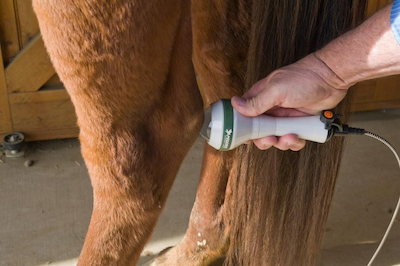
High-intensity laser therapy has become an increasingly popular tool in equine practice. Therapeutic lasers deliver focused light energy that penetrates deep into tissues, reducing inflammation, relieving pain, and accelerating healing at the cellular level.
Common equine applications: - Tendon and ligament injuries - Wound healing and post-surgical recovery - Arthritis and joint inflammation - Back and muscle soreness - Hoof conditions including laminitis support - Nerve injuries
Laser therapy is particularly valuable for horses because it is completely non-invasive, requires no sedation, and can be used on sensitive areas that are difficult to treat otherwise. Many horses tolerate and enjoy laser therapy sessions, often showing visible relaxation as treatment progresses.
Herbal Medicine for Horses
Herbal medicine has a long history in equine care. Today, veterinarians trained in Chinese and Western herbal medicine use plant-based formulas to support horses dealing with chronic conditions, immune challenges, and recovery from illness or injury.
Common applications include: - Immune support for horses prone to respiratory illness - Digestive support for ulcer-prone horses - Anti-inflammatory support for horses with chronic joint conditions - Stress and anxiety management - Liver and kidney support during long-term medication use
It is important that herbal formulas for horses be prescribed and overseen by a veterinarian trained in herbal medicine. Dosing for horses is very different from small animals, and some herbs can interact with conventional medications or cause toxicity at incorrect doses.
Nutritional Therapy for Horses
What a horse eats profoundly affects every aspect of its health — from coat and hoof quality to gut health, immune function, and behavioral stability. Holistic veterinarians trained in equine nutrition take a whole-body approach to feeding, looking at forage quality, mineral balance, and the individual horse's constitution rather than relying on generic feed recommendations.
Many common equine health issues — including metabolic syndrome, laminitis, chronic inflammation, and poor performance — have strong nutritional components that conventional care alone often overlooks.
Integrative vs. Conventional Equine Care
Holistic equine veterinarians do not reject conventional medicine. The integrative approach uses conventional diagnostics — radiographs, ultrasound, bloodwork — to understand what is happening, then combines the best of both worlds for treatment. A horse with a tendon injury, for example, might receive conventional rest and anti-inflammatory medication alongside laser therapy, acupuncture, and a targeted nutritional protocol for tissue healing.
This combined approach often produces better outcomes than either approach alone — faster healing, fewer reinjuries, and better long-term soundness.
Finding a Qualified Holistic Equine Veterinarian
Holistic equine veterinary care requires specialized training beyond a standard DVM degree. When searching for a practitioner, look for these credentials:
- Chi Institute certification — indicates advanced training in acupuncture and TCVM
- IVAS certification — International Veterinary Acupuncture Society
- The Healing Oasis certification — for VSMT practitioners
- VBMA membership — Veterinary Botanical Medicine Association for herbal practitioners
The Holistic Vet Directory lists certified equine practitioners across the United States. You can search by state to find a qualified holistic equine veterinarian near you.
Is Holistic Care Right for Your Horse?
If your horse is dealing with a chronic condition that has not fully resolved with conventional treatment, showing performance issues without a clear structural cause, or simply not thriving the way you know they can — holistic and integrative care is worth exploring. Many horse owners describe it as the missing piece that finally helped their animal feel and perform their best.
Join the Conversation
Have thoughts on this topic? Connect with other holistic pet parents in our community forum.
Join Holistic Pet Parents