Holistic Approaches to Dog Arthritis: A Complete Guide
Arthritis affects an estimated 25% of dogs during their lifetime. For large breeds, the number is even higher. If your dog has been diagnosed with osteoarthritis — or if you are watching an aging dog slow down, struggle to rise, or hesitate before jumping — you already know how painful it is to watch.
Conventional medicine offers effective tools: NSAIDs like carprofen and meloxicam for inflammation, gabapentin for nerve pain, and in severe cases, surgical options like joint replacement. But many dog owners are searching for more — treatments that manage pain with fewer side effects, support the body's own healing capacity, and address the whole dog rather than just the inflamed joint.
This is where holistic and integrative veterinary medicine excels. Arthritis is one of the conditions with the strongest evidence base for holistic treatment, and many dogs experience significant improvement when natural therapies are added to their care plan.
Understanding Dog Arthritis
Osteoarthritis is a degenerative joint disease in which the cartilage that cushions joint surfaces breaks down over time. As cartilage deteriorates, bone rubs against bone, causing pain, inflammation, and progressive loss of mobility.
Contributing factors include: - Age-related wear - Joint injuries (cruciate ligament tears, fractures) - Developmental conditions (hip dysplasia, elbow dysplasia, OCD) - Obesity — excess weight accelerates joint deterioration - Genetics — some breeds are predisposed
Common signs: - Stiffness after rest, especially in the morning or after naps - Reluctance to jump, climb stairs, or get in/out of the car - Limping or favoring a leg - Decreased activity level or loss of interest in play - Difficulty rising from a lying position - Muscle loss in the affected limbs - Behavioral changes — irritability, reluctance to be touched - Licking or chewing at joints
Arthritis cannot be cured — the cartilage damage is irreversible. But it can be managed effectively, and this is where holistic medicine offers real value. The goal is to reduce pain, slow disease progression, maintain mobility, preserve muscle mass, and sustain quality of life for as long as possible.
Holistic Modalities for Dog Arthritis
Acupuncture
Acupuncture is one of the most well-studied holistic treatments for arthritis pain in dogs. Fine needles placed at specific points stimulate the release of endorphins, reduce local inflammation, and modulate pain signaling in the nervous system.
What the research shows: Multiple peer-reviewed studies have demonstrated that acupuncture produces measurable pain relief in arthritic dogs, with improvements in mobility scores, weight-bearing on affected limbs, and owner-reported quality of life.
What to expect: Sessions last 20 to 30 minutes. Most dogs relax deeply during treatment, and many fall asleep. Initial treatment is usually weekly for 4 to 6 sessions, then tapered to every 2 to 4 weeks for maintenance.
Best for: Dogs with chronic pain who cannot tolerate NSAIDs, dogs already on medication who need additional relief, and dogs with multiple affected joints.
Learn more about what to expect at an acupuncture session →
Chiropractic Care
Arthritis does not just affect the joint itself — it changes how the entire body moves. Dogs with hip arthritis shift weight to their front legs. Dogs with elbow arthritis alter their gait to unload the painful joint. These compensatory patterns create secondary problems: spinal misalignments, muscle spasms, and pain in areas far from the original joint.
Chiropractic care addresses these compensatory patterns by restoring normal spinal and joint mechanics, relieving pressure on nerves, and reducing the muscle tension that accompanies chronic pain.
What to expect: Gentle, controlled adjustments to specific joints and spinal segments. Most dogs tolerate adjustments well and show immediate improvements in movement quality. Sessions are typically every 2 to 4 weeks.
Best for: Dogs with concurrent back pain, stiffness in multiple areas, or gait abnormalities. Particularly effective when combined with acupuncture or massage.
Learn more about veterinary chiropractic →
Laser Therapy
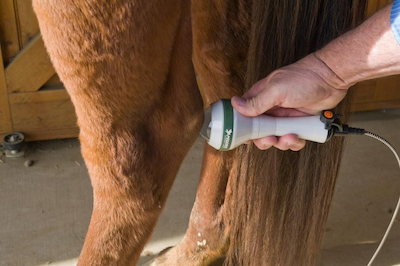
Laser therapy delivers focused light energy directly to the affected joint, triggering cellular-level changes that reduce inflammation, increase blood flow, and accelerate tissue repair. For arthritis, it provides localized pain relief without systemic side effects.
What the research shows: Laser therapy has been shown to reduce inflammatory markers in arthritic joints and improve mobility scores in clinical trials. It is particularly effective as part of a multimodal pain management plan.
What to expect: Sessions are quick — 5 to 15 minutes per joint. Your dog feels a gentle warmth and typically relaxes during treatment. Initial treatment is 2 to 3 times per week for 2 to 3 weeks, then weekly or biweekly for maintenance.
Best for: Dogs with pain localized to specific joints, post-surgical arthritis management, and dogs who enjoy the warmth and comfort of treatment.
Learn more about laser therapy →
Herbal Medicine
Several herbs have documented anti-inflammatory and pain-relieving properties relevant to arthritis:
Turmeric (curcumin). One of the most studied natural anti-inflammatories. Curcumin inhibits inflammatory pathways similar to how NSAIDs work, but through different mechanisms and with fewer gastrointestinal side effects. Bioavailability is a challenge — it must be combined with piperine (black pepper extract) or given in a phospholipid-bound form to be effective.
Boswellia (Indian frankincense). Contains boswellic acids that inhibit 5-lipoxygenase, an inflammatory enzyme. Clinical studies in dogs have shown improved mobility and reduced pain scores.
Devil's claw. A traditional anti-inflammatory herb with analgesic properties. Used for centuries in African traditional medicine for joint pain.
Corydalis. Used in Traditional Chinese Medicine for pain management. Contains compounds that affect multiple pain pathways simultaneously.
CBD (cannabidiol). Emerging research suggests anti-inflammatory and pain-modulating effects. The legal and regulatory landscape is evolving, but several veterinary-specific CBD products are available. Quality and dosing vary significantly between products.
Important: Herbal supplements can interact with medications. Always work with a veterinarian trained in herbal medicine rather than self-prescribing.
Learn more about veterinary herbal medicine →
Nutritional Therapy
Diet plays a critical role in arthritis management:
Omega-3 fatty acids (EPA and DHA). Fish oil supplementation is one of the most evidence-backed nutritional interventions for arthritis. Omega-3s are incorporated into cell membranes and shift the body's inflammatory balance toward anti-inflammatory pathways. Therapeutic doses for arthritis are higher than what most commercial diets provide.
Weight management. This is arguably the single most impactful intervention for an arthritic dog. Every excess pound adds stress to compromised joints. Research has shown that maintaining a lean body condition can delay the onset of arthritis by nearly two years and reduce severity significantly.
Joint-supporting nutrients. Glucosamine, chondroitin sulfate, green-lipped mussel extract, and hyaluronic acid support cartilage health and joint fluid viscosity. Evidence for individual supplements varies, but combination products show the most consistent benefits.
Anti-inflammatory diet design. Reducing pro-inflammatory ingredients (excess omega-6 fatty acids, high-glycemic carbohydrates) and increasing anti-inflammatory components (omega-3s, antioxidant-rich vegetables, turmeric) creates a dietary environment that supports joint health.
Learn more about veterinary nutritional therapy →
Massage Therapy
Massage does not treat the arthritic joint directly, but it addresses the muscular consequences of arthritis that significantly impact quality of life:
- Relieves compensatory muscle tension. Dogs with arthritis develop chronic muscle tightness from altered movement patterns.
- Maintains circulation to muscles that may be losing mass due to decreased use.
- Reduces pain perception through endorphin release and nervous system modulation.
- Improves flexibility and range of motion in muscles surrounding affected joints.
Regular massage can make a meaningful difference in how an arthritic dog moves and feels day to day.
Learn more about veterinary massage therapy →
Physical Rehabilitation
Veterinary rehabilitation — the animal equivalent of physical therapy — is a cornerstone of arthritis management:
Therapeutic exercise. Controlled, targeted exercises that maintain muscle strength around arthritic joints without stressing the joints themselves. Strong muscles act as natural joint stabilizers.
Hydrotherapy. Underwater treadmills and swimming pools allow dogs to exercise with reduced weight-bearing stress. Water provides resistance for muscle building while buoyancy protects compromised joints. This is one of the most effective tools for maintaining mobility in arthritic dogs.
Range of motion exercises. Gentle, guided joint movement that prevents stiffness and maintains flexibility.
Balance and proprioception work. Exercises on unstable surfaces that challenge the body's awareness of its position in space. This strengthens stabilizing muscles and improves coordination.
Traditional Chinese Veterinary Medicine (TCVM)
TCVM approaches arthritis through pattern diagnosis. The treatment is not just "arthritis" — it is a specific type of arthritis with a specific underlying imbalance:
- Cold Bi Syndrome: Pain worse in cold, damp weather, improves with warmth. Treated with warming acupuncture, warming herbal formulas, and warming foods.
- Damp Bi Syndrome: Heavy, swollen joints, worse in humid weather. Treated with herbs that drain dampness and foods that resolve fluid accumulation.
- Heat Bi Syndrome: Hot, red, inflamed joints. Treated with cooling herbs and anti-inflammatory acupuncture points.
This individualized approach often explains why some dogs respond better to certain treatments than others — the treatment matches the pattern, not just the diagnosis.
Building a Multimodal Arthritis Plan
The most effective arthritis management typically combines multiple modalities. A common integrative protocol might include:
- Foundation: Weight management + omega-3 supplementation + joint-supporting nutrients
- Pain control: Acupuncture every 2 to 4 weeks + laser therapy as needed
- Mobility maintenance: Physical rehabilitation + therapeutic exercise + massage
- Herbal support: Anti-inflammatory herbal formula (turmeric, boswellia, or a Chinese herbal formula)
- Conventional medication: NSAIDs at the lowest effective dose, used as needed rather than daily, if holistic therapies provide sufficient baseline control
The goal is not to choose between conventional and holistic medicine — it is to use the best of both to provide the most relief with the fewest side effects. Many dog owners find that adding holistic therapies allows them to reduce their dog's NSAID dose, which reduces the risk of long-term side effects while maintaining or improving pain control.
Environmental and Lifestyle Modifications
Beyond medical treatment, simple changes at home can significantly improve an arthritic dog's comfort:
- Orthopedic beds that support joints and make lying down and getting up easier
- Ramps for getting in and out of cars and onto furniture
- Non-slip surfaces — rugs or yoga mats on slippery floors to prevent splaying and improve confidence
- Raised food and water bowls to reduce neck strain
- Gentle, consistent exercise — short walks multiple times a day rather than one long walk
- Warmth — heated beds or warm compresses on stiff joints, especially in cold weather
- Nail trimming — long nails alter posture and gait, adding stress to compromised joints
When to Seek Holistic Care for Arthritis
Do not wait until your dog can barely walk. The earlier holistic care begins, the more effectively it can slow disease progression and maintain quality of life. Consider an integrative consultation if:
- Your dog has been diagnosed with arthritis and you want to explore options beyond NSAIDs
- Your dog is on NSAIDs and you want to reduce the dose or find complementary support
- Your dog cannot tolerate NSAIDs due to liver, kidney, or GI issues
- Your dog's arthritis is progressing despite conventional treatment
- Your dog is showing early signs of stiffness or mobility changes
- Your dog's breed is predisposed to joint disease and you want a proactive plan
Finding a Holistic Vet for Arthritis
Arthritis is one of the conditions where integrative care truly shines. Look for a practitioner who offers multiple modalities — acupuncture combined with herbal medicine, laser therapy combined with rehabilitation, or a full TCVM approach with food therapy. The more tools available, the more precisely the treatment can be tailored to your dog's specific needs.
Our directory of holistic veterinarians lets you search by modality and location. Many practitioners offer free or reduced-cost initial consultations for new clients.
Find a holistic vet near you →
The Bottom Line
Arthritis is a progressive disease, but progressive does not mean hopeless. With the right combination of holistic therapies, dietary management, lifestyle modifications, and conventional support when needed, most arthritic dogs can maintain comfortable, active lives far longer than their owners expect.
The best outcomes come from starting early, using multiple complementary approaches, and working with a veterinarian who understands both conventional and holistic options. Your dog's golden years do not have to be defined by pain — they can be defined by the quality of care they receive.
Join the Conversation
Have thoughts on this topic? Connect with other holistic pet parents in our community forum.
Join Holistic Pet Parents